Foot reflexology is steady, firm pressure on points of the feet and lower legs. It is built on an old idea: that each part of the foot matches a part of the body. Research has not proven the map. What people notice is simpler. Tired feet feel better, and the rest of you often relaxes too.
The short answer
What it is: steady, firm pressure on points of the feet and lower legs.
The idea: each area of the foot matches an area of the body.
The evidence: the map has not been proven. The relaxation is what people feel.
Here: a warm mineral soak, then 45, 60 or 90 minutes, fully clothed.
How the foot map works
Reflexology divides each foot into zones and matches each zone to an area of the body. Charts can look very detailed, but four zones cover the main idea:
Toes: the head and neck
Ball of the foot: the chest and shoulders
Arch: the stomach and intestines
Heel: the lower back and pelvis
The right foot stands for the right side of the body, and the left foot for the left. The inner edge of each foot, from the big toe to the heel, lines up with the spine.
What the research says
The National Institutes of Health says reflexology is claimed to bring relaxation and healing to the matching parts of the body, but that this has not been proven. A review of 18 trials found no convincing evidence that it treats any medical condition. Cleveland Clinic notes there are no well-designed studies showing reflexology works better than a foot massage.
So we treat the map as a guide to a thorough foot massage, not a diagnosis. A tender spot on your arch does not mean something is wrong with your stomach. It usually means that part of your foot works hard.
Where it comes from
Reflexology grew out of zone therapy, an idea described by the American doctor William Fitzgerald in the early 1900s and published in a 1917 book. In the 1930s, Eunice Ingham focused it on the feet, and it became the practice most people now call reflexology.
From Dr. Nick, DAOM L.Ac.
Chinese medicine has its own long tradition of caring for the feet, from warm evening soaks to pressure on Yongquan, the point on the sole whose name means bubbling spring. We keep what people can feel, the warm soak and the steady pressure. We do not tell anyone a sore arch is a stomach problem.
Reflexology and digestion
People often ask about reflexology for constipation, since the arch is matched to the stomach and intestines. A 2020 review of small trials found the evidence was not strong enough to say it helps. If constipation keeps coming back, or comes with pain or bleeding, see your doctor.
What a session is like
Arrive 15 minutes early.
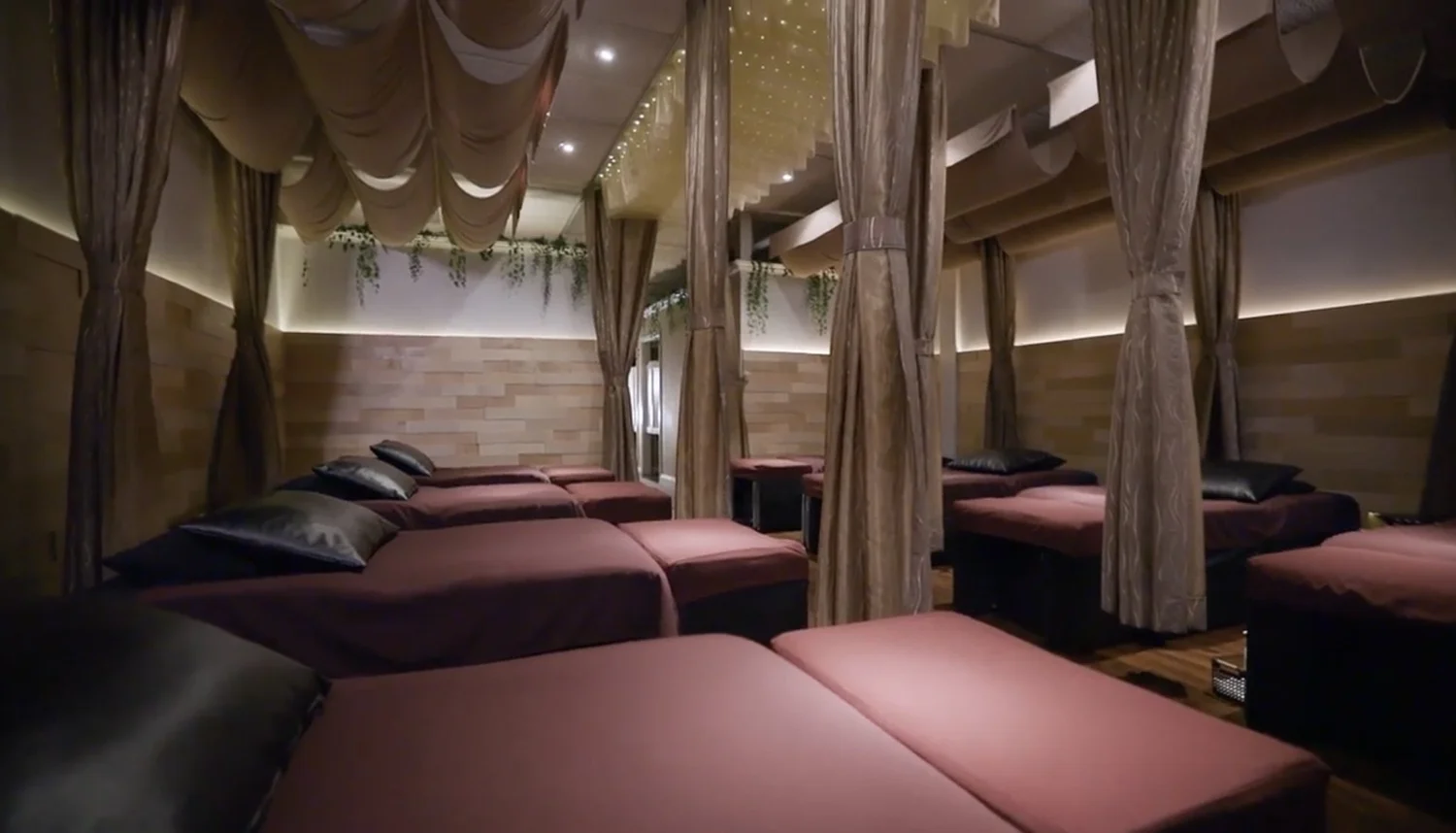
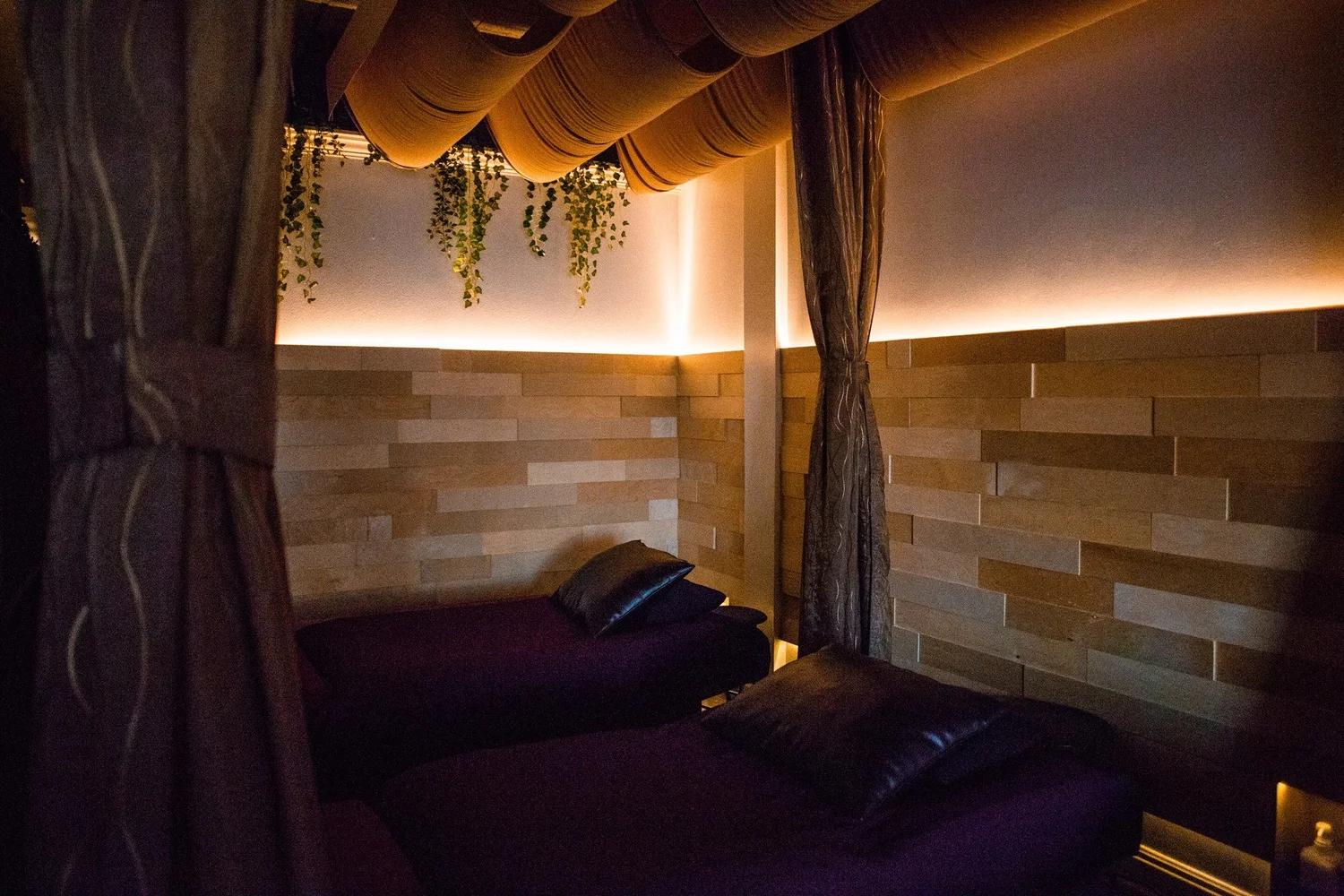
You settle in at your own station in the Reflex Lounge, fully clothed, with heavy curtains closed around you. Wear something that rolls up above the calf.
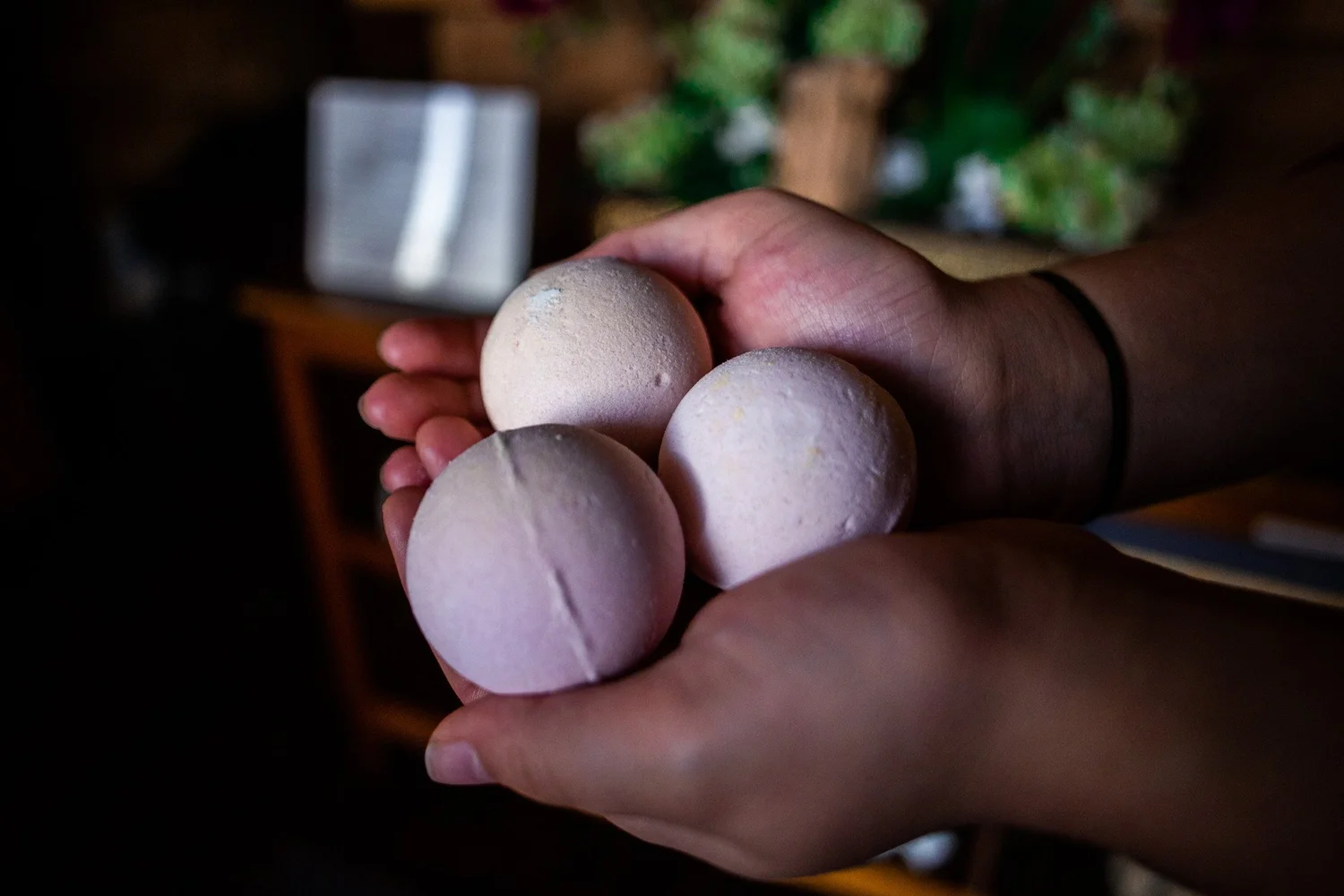
Your feet go into a warm mineral soak.
Your therapist works steady pressure along the reflex points of your feet and lower legs, at the pressure you ask for.
Afterward, you are offered water or tea.
Sessions run 45, 60 or 90 minutes. 45 is a full session for the feet, 60 adds time for the calves and lower legs, and 90 is for the deepest reset. You can add hot stones or a steam eye mask. If you want your back and shoulders worked too, a Combination starts with the feet and then moves to a body massage at the same curtained station.
Common questions
Is foot reflexology the same as a foot massage?
Close. A general foot massage kneads the muscles of the feet. Reflexology follows the foot map with steady pressure on specific points. Our foot massage follows the map, so you get both.
Does foot reflexology hurt?
It should feel firm, not painful. Some points may feel tender. Tell your therapist and they will ease off.
Is foot reflexology safe for everyone?
For most people, yes. If you have a foot injury, an open cut or infection, blood clots, or diabetes that affects feeling in your feet, check with your doctor first and tell your therapist before you start.
Do I need to undress?
No. Only your shoes and socks come off.
Book your foot massage
Serenity Zen has studios in West Covina and Diamond Bar. Open daily, 10 AM to 9 PM.
Book West Covina Book Diamond Bar
Sources: NCCIH, Reflexology. Ernst, Is reflexology an effective intervention, Medical Journal of Australia, 2009. Cleveland Clinic, Reflexology. National Library of Medicine, Fitzgerald and Bowers, Zone therapy, 1917. Foot reflexology for constipation, a 2020 review.