
Within clear limits, massage may help with chronic pain. It can ease the tightness that builds up around long-term pain, help a body that has been on alert for months settle, and for many people make sleep come easier that night. It is not a treatment for the condition underneath, so it works best alongside the care you get from your doctor or physical therapist.
The short answer
What it can do: ease the guarding and tightness around the pain, and help you settle.
What it cannot do: treat the cause, or replace a diagnosis.
Best setup: start lighter than you think, and use Target on the areas that hurt.
Tell your therapist: where it hurts, what makes it worse, and anything to avoid.
What massage can offer
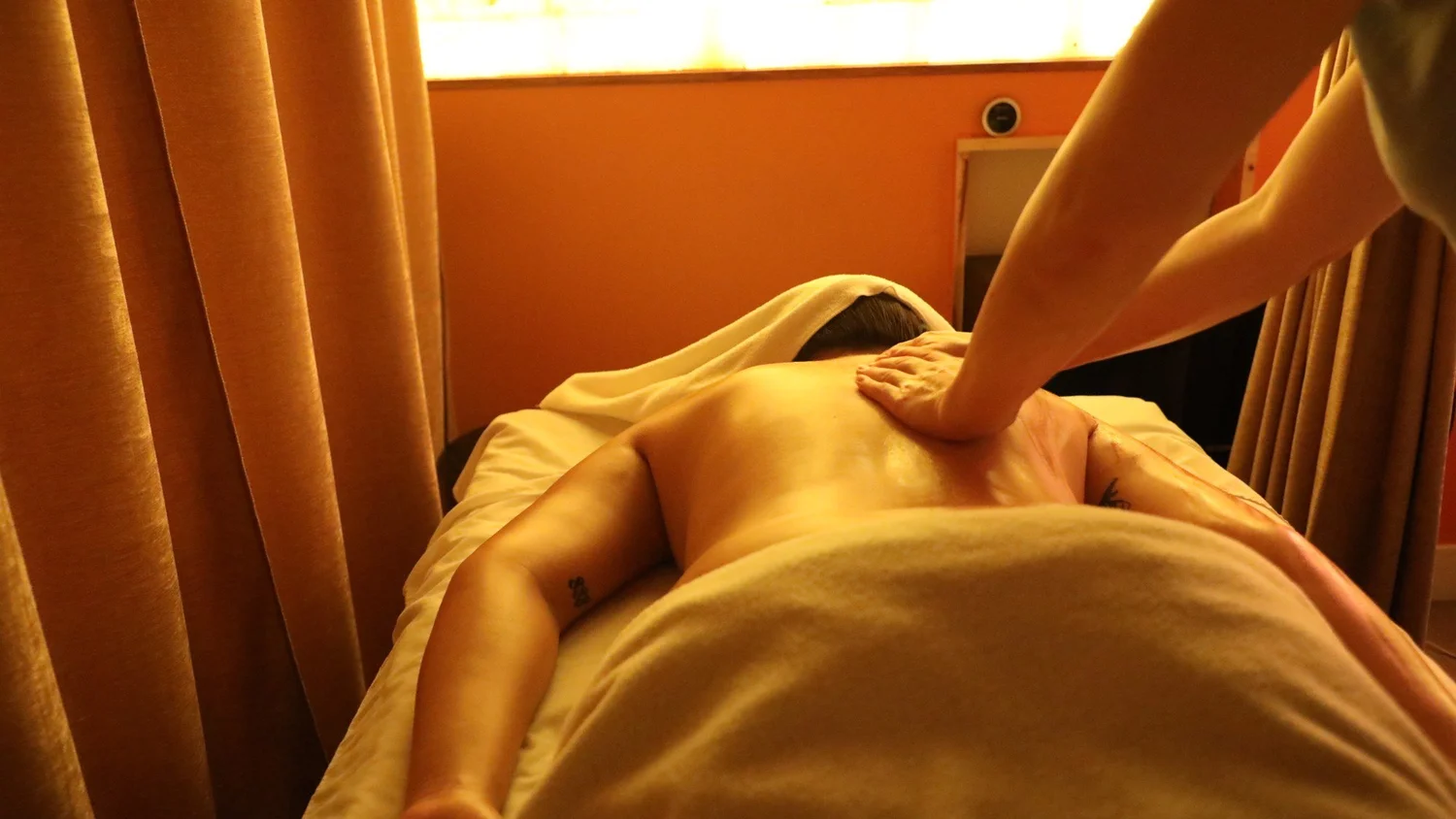
When pain lasts for months, the muscles around it often tighten to protect it. That guarding becomes an ache of its own: shoulders held high, a lower back that never quite lets go. Slow, steady pressure can loosen muscles that have been holding on for a long time. The relief is usually temporary, but it is often real enough to feel: a neck that turns further, shoulders that settle.
Pain and stress also feed each other. Unhurried, predictable touch tends to let a braced body stand down, and for many people that means a better night's sleep.
What it cannot do
Massage does not treat the cause of chronic pain. It will not repair a worn joint, a disc or a nerve, and it is no substitute for a diagnosis. If your pain has a name and a care plan, massage belongs inside that plan. Tell your doctor or physical therapist you are adding it; they may want you to avoid an area or keep the pressure light.

How to tell your therapist about pain
Where it is, and where it spreads.
What it feels like: dull, sharp, burning or tingling.
What makes it worse, and what eases it.
Anything to avoid: a recent flare, an injury, a surgery site, or an area your doctor flagged.
During the session, say right away if something is sharp or electric. That is never the goal.
How to set up your session
Start lighter than you think you need. A body in long-term pain often responds better to less at first, and you can ask for more at any point. If the pain sits in a few places, add Target to a body massage when you book online: choose up to three areas, such as neck, shoulders and upper back, and only those are worked. If warmth usually eases your pain, hot stones may help too.
When to check with your doctor first
Pain that is new, getting worse, or keeping you up at night.
Numbness, tingling or weakness in an arm or leg.
A recent injury, surgery or flare.
Blood clots, now or in the past, or taking blood thinners.
Osteoporosis, or a condition you are being treated for.
From Dr. Nick
With long-term pain, the goal of a session is not to win. It is to show a guarded body that it can let go for a while, and that tends to last longer when the pressure never forces it.
Common questions
Will massage make chronic pain worse?
It should not. Some tenderness after firm work can be normal, but a flare that lasts is a sign to go lighter next time. Tell us, and we will adjust.
How often should I come?
Some people come every week or two for a few visits, then space out. Your doctor's plan comes first. More in how often to get a massage.
Is deep tissue better for chronic pain?
Not necessarily. Many people with long-term pain do better with medium pressure they can relax into.
Can I get a massage for back pain?
Yes, unless your doctor has advised against it. See the best massage for back pain.
Book your massage
Serenity Zen has studios in West Covina and Diamond Bar. Open daily, 10 AM to 9 PM.