A slow body massage, at a pressure you can relax into. The name of the style matters less than the pace, and less than whether you are bracing against it.
The short answer
For most people: a body massage at light to medium pressure, with long, slow strokes.
Tight neck and shoulders: firmer there, lighter everywhere else.
On your feet all day, or not ready to undress: a foot massage.
If you are holding your breath against the pressure, it is too firm.
What the research says
A review of 37 studies found that a single massage eased anxiety in the moment. It found no reliable change in cortisol, the hormone often called the stress hormone, and a later review by the same researchers put the effect on cortisol close to zero.
Mayo Clinic lists lower stress as a benefit of massage and notes that more research is needed. So the honest claim is modest: many people feel calmer after a massage, even though a hormone test may not show it.
Where stress shows up in your body
Stress tends to settle in the same few places: the jaw, the neck and shoulders, and the lower back. Under pressure, the body braces, and those muscles can keep working long after the moment has passed.
Stress also moves the breath up into the chest. When the belly stops moving, small muscles in the neck help lift the ribs with every breath. That is one reason a hard week can end with a stiff neck, even when you did nothing physical.
Why slow and steady matters
Stress keeps the body on guard. Slow, predictable touch gives it a reason to stop. Partway through a session, many people notice their breathing slow down and their jaw let go.
That is the idea behind the Zen Flow™ method, which every therapist here learns: broad before narrow, strokes that connect, and pressure that deepens as you breathe out. It is never hurried.
Get the pressure right
If you are holding your breath or tightening against the pressure, it is too firm for stress relief, even if it feels like it is doing something.
Pressure runs from light Swedish to deep tissue, at the level you ask for. If you came mainly to unwind, ask for lighter pressure. You can change it at any time and never have to explain why.
Match the massage to your stress
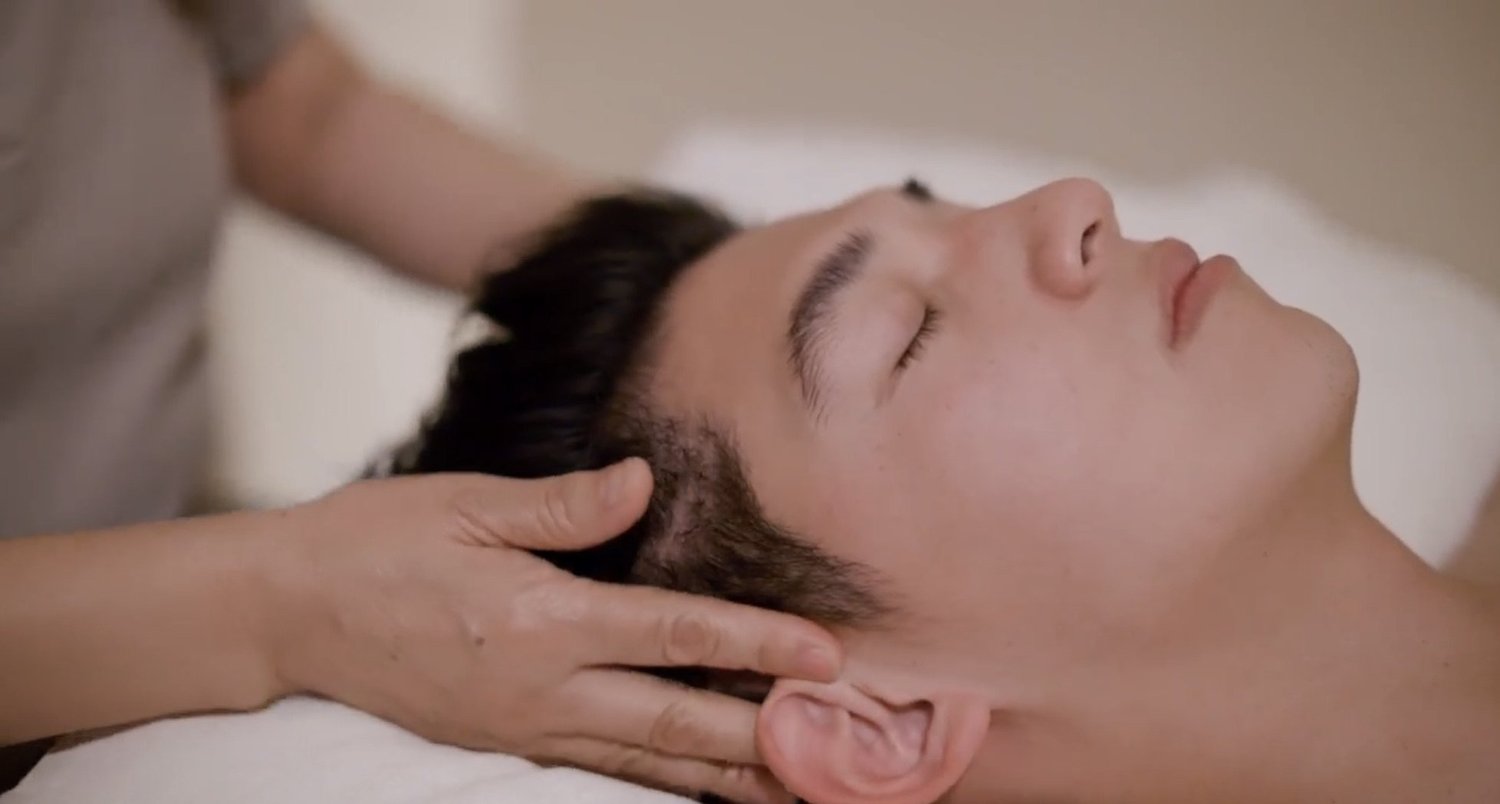
Busy mind, poor sleep, feeling wired: a body massage at light to medium pressure, with long, slow strokes. You can also choose the Scalp Massage style when you book, for slow work across the scalp.
Tight neck, shoulders or upper back: firmer pressure there and lighter everywhere else. If you only want those spots worked, the Target style lets you choose up to three areas.
On your feet all day, or not ready to undress: a foot massage. You stay fully clothed at your own curtained station in the Reflex Lounge.
A little of everything: the Combination. It's a foot massage that flows into a body massage, so your feet and your back both get time in one visit.
From Dr. Nick, DAOM L.Ac.
Most people who come in for stress hold it in the same few places: the shoulders, the jaw, the breath. Slow work gives the breath time to follow. When your breathing slows down on the table, you are getting what you came for.
Add-ons that may help you settle
Any of these can be added to a session:
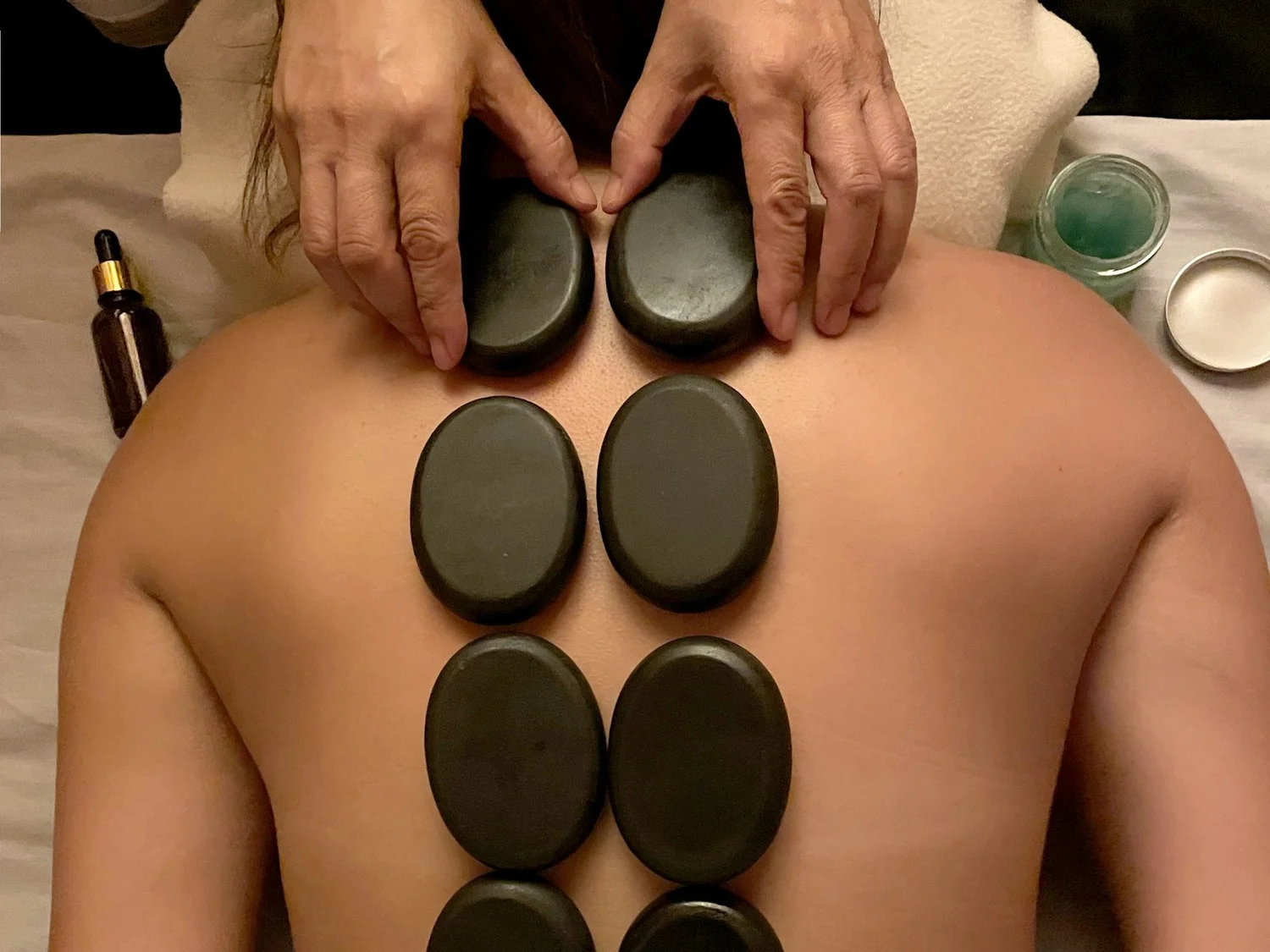
Hot stones: smooth, heated stones rest on and glide over tight muscles. Warmth tends to help a muscle let go.
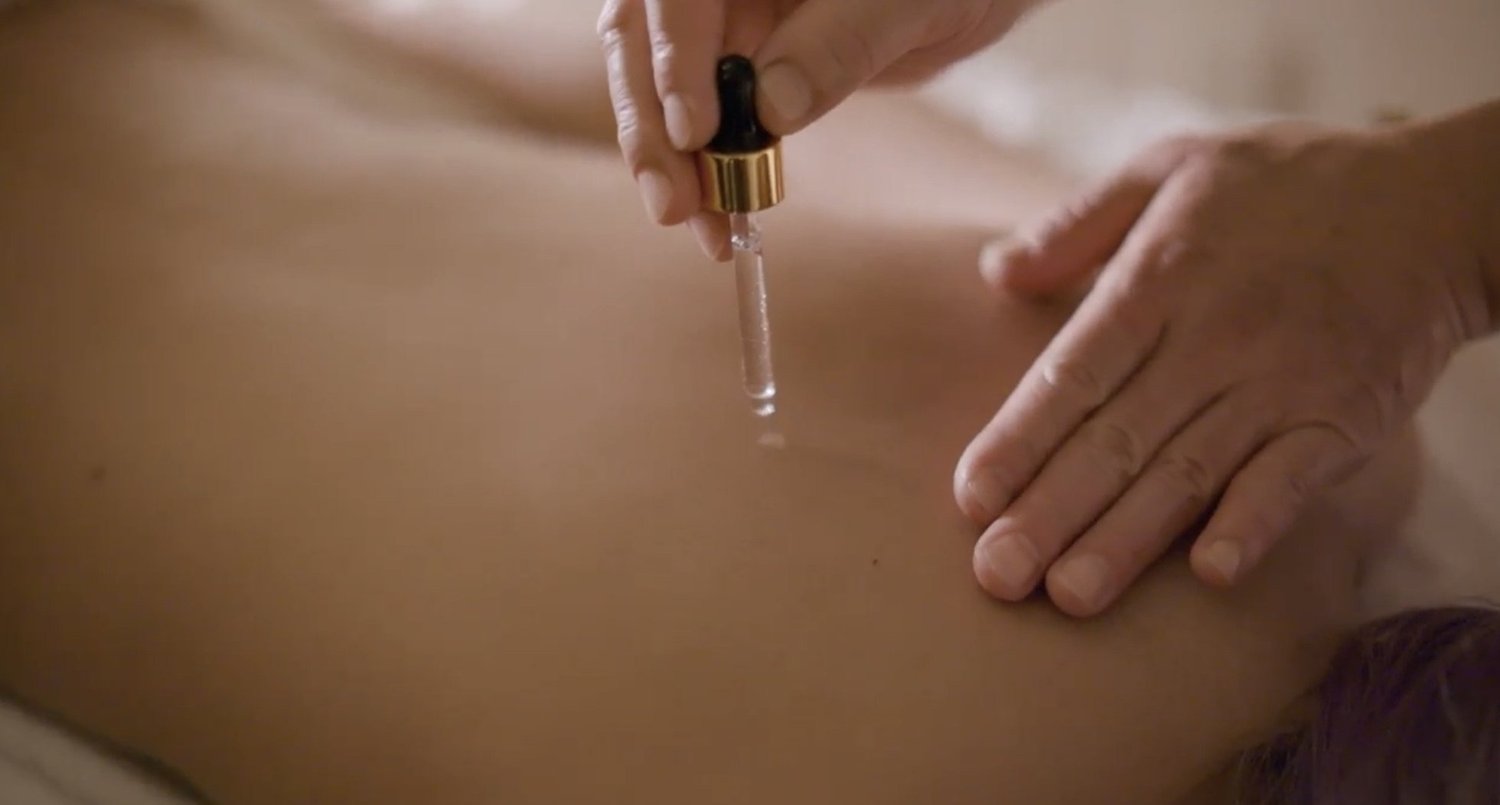
Essential oils: a blend mixed in-house from lavender, lemon, eucalyptus, peppermint and melaleuca, warmed in your therapist's palms and held close for you to breathe in.
Steam mask: a gently heated eye mask for the length of your session, which can make it easier to switch off.
On the day
Arrive 15 minutes early. Rushing in from traffic is the opposite of what you came for.
Leave your phone in your locker. The key bracelet stays with you.
If you would rather not talk, say so. A quiet session is normal.
Have the water or tea offered afterward, and give yourself a few minutes before you drive.
Between visits
Break the hold every hour or so. Stand up, let your shoulders drop, and look at something far away for a minute.
Check your jaw: lips together, teeth apart, tongue resting on the roof of your mouth.
Breathe out for longer than you breathe in, five or six times, and let your belly move.
After work, change your clothes, take a 15-minute walk or a warm shower, and leave your phone in another room for the first hour home.
For a short routine to start the day, see five mindfulness exercises.
Common questions
Is deep tissue massage good for stress?
It can be, if your stress sits in tight muscles and you enjoy firm pressure. If deep work makes you brace, a lighter massage may relax you more.
Can stress cause back pain?
It can add to it. Bracing keeps the muscles of the lower back working when they could rest, and tired muscles ache. If back pain comes with numbness, weakness or pain down a leg, check with your doctor first. More in the best massage for back pain.
How do I stop clenching my jaw?
Use the jaw check above whenever you notice it. If your jaw is sore when you wake up, or it clicks or locks, see your dentist.
How often should I get a massage for stress?
For everyday stress, once a month is common. Through a hard stretch, some guests come every week or two, then space their visits out.
Can massage help with anxiety?
Research on massage for anxiety disorders is limited, and the results are mixed. Many guests feel calmer after a massage, but it is not a treatment for an anxiety disorder. If anxiety is affecting your sleep, work or daily life, talk with your doctor.
Can I get a massage for stress while pregnant?
Yes, at every stage of pregnancy and after delivery. Prenatal massage is side-lying and bolstered, and CBD and Menthol Balm are not used during a prenatal session. Tell us when you book if your doctor has flagged anything.
Book your massage
Serenity Zen has studios in West Covina and Diamond Bar. Open daily, 10 AM to 9 PM.
Book West Covina Book Diamond Bar
Sources: Moyer and others, A meta-analysis of massage therapy research, Psychological Bulletin, 2004. Moyer and others, Does massage therapy reduce cortisol, Journal of Bodywork and Movement Therapies, 2011. Mayo Clinic, Massage therapy. NCCIH, Anxiety and complementary health approaches.