A knot is a small, tight, tender spot in a muscle, most often in the tops of the shoulders, the upper back and the neck. Most come from long hours in one position, stress or repeated motion. Movement and heat help at home, and massage or cupping can often loosen the ones that stay.
The short answer
What it is: a small area of muscle that stays tight instead of letting go.
Common causes: desk posture, stress, and the same motion over and over.
At home: move often, use heat, and take breaks from the cause.
See a doctor: numbness, pain down an arm or leg, or a lump that keeps growing.
What a knot actually is
A knot is not a muscle tied in a knot. It is a small area of muscle that stays tight and sensitive, and it can feel like a firm pea or a ropy band under the fingers. Pressing on one is often tender, and it may send an ache a short distance away, such as from the shoulder up into the neck. Therapists sometimes call these trigger points.
Why they form
Desk posture. The head drifts forward, the shoulders creep up, and the same muscles hold that shape through long hours of sitting.
Stress. The shoulders rise, the jaw sets and breathing gets shallow, so a few muscles stay a little tight for hours at a time.
Overuse. The same motion again and again: a bag on one shoulder, a child on one hip, a new workout.
What helps at home
Move often. Stand up and roll your shoulders every 30 to 60 minutes. A short walk counts.
Use heat. A warm shower or a heating pad for 15 to 20 minutes tends to relax the muscle it rests on. Keep a layer between the pad and your skin, and never sleep on it.
Take breaks from the cause. Switch the bag to the other shoulder, raise your screen to eye level, and unclench your jaw when you notice it.
How massage and cupping can help
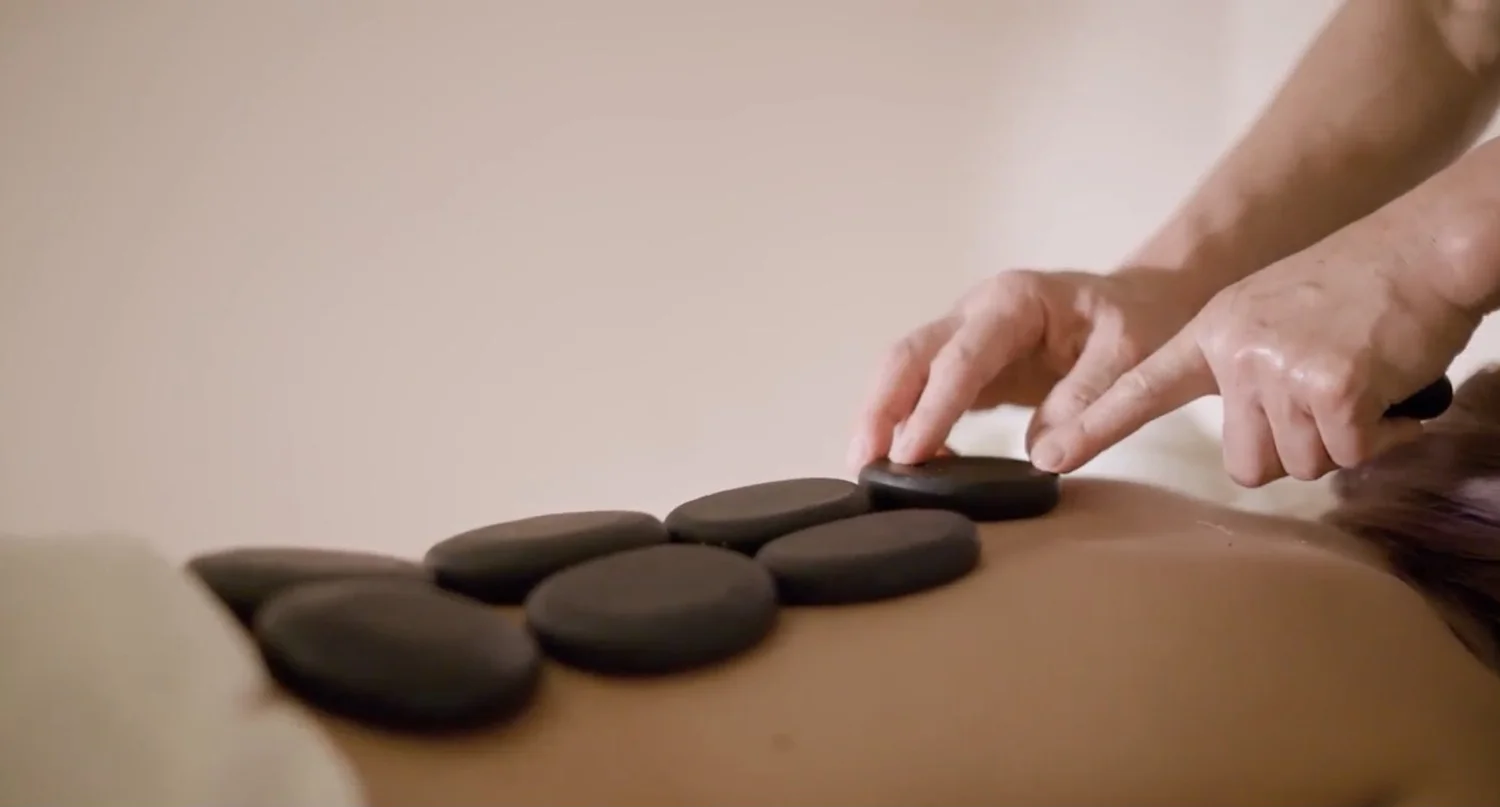
Massage works the knot and the muscle around it. Every body massage here follows the Zen Flow™ method: broad strokes come before narrow ones, and pressure deepens as you breathe out, when a muscle tends to guard less. The method treats the body as one piece, so a knot in the shoulder is worked together with the neck.
Cupping, an enhancement you can add to any service, works the other way: gentle suction lifts the tissue instead of pressing into it. Some people find that easier on a very tender spot. You choose where the cups go, and they can leave round marks that fade over a few days.
A knot that has been there for months may take more than one visit to ease. If yours keep returning to the same few places, a body massage with the Target style works only the areas you choose, up to three.
From Dr. Nick, DAOM L.Ac.
In Chinese medicine, a stubborn knot is often described as stagnation: something that should move and does not. The answer is the one your body is already asking for. Move more, stay warm, and work it slowly rather than attack it.

When to check with your doctor
A knot is a muscle issue, but some pain that feels like one is not. Check with your doctor first if you notice:
Pain that started with a fall or injury
Numbness, tingling or weakness, or pain that runs down an arm or leg
A lump that feels hard, keeps growing or does not seem to be in a muscle
A calf that is swollen, warm or red
Pain with a fever, or pain that wakes you at night
Common questions
Can a knot be massaged out for good?
It can often be eased, but if the cause stays the same, it tends to come back. The habits between visits matter as much as the massage.
Should a knot hurt when it is pressed?
It can feel tender, like a strong ache that eases as you breathe out. It should never feel sharp or burning. If it does, tell your therapist right away.
Should I use heat or ice on a knot?
Heat usually suits a knot, since warmth tends to relax the muscle it rests on. Ice is for a fresh injury or swelling, as explained in heat or ice for sore muscles.
Is it normal to be sore after a knot is worked?
Some tenderness the next day can be normal after deep work. It usually fades within a day or two.
Book your massage
Serenity Zen has studios in West Covina and Diamond Bar. Open daily, 10 AM to 9 PM.